Landlord Insurance in Homestead: What Rental Property Owners Need

Owning a rental property can provide steady income and long-term value. However, it also creates risks that differ from those of an owner-occupied home.
A tenant could suffer an injury on the property. A kitchen fire could make the residence temporarily uninhabitable. Likewise, a hurricane could damage the roof. Water could also damage the building, appliances, or flooring. In addition, the owner could lose rental income while contractors complete covered repairs.
For property owners in Homestead, Leisure City, Redland, and surrounding South Dade communities, landlord insurance can help address many of these exposures. Therefore, owners should select coverage based on how they occupy, maintain, and rent the property.
A Homeowners Policy May Not Be Appropriate for a Rental
Insurance companies generally design traditional homeowners policies for residences occupied by their owners.
When you rent a home to tenants, however, you need to tell the insurance company that you use the property as a rental. Florida’s homeowners insurance consumer toolkit explains that insurers offer landlord coverage through dwelling policies when owners rent homes to other people.
Failing to disclose rental use can create problems with eligibility, underwriting, renewal, or a future claim. Therefore, rental property owners should accurately report:
- Tenant occupancy
- Annual, seasonal, or short-term rental arrangements
- Any portion of the property that remains owner occupied
- Whether the residence includes furnishings
- Current vacancies
- Renovations or repairs underway
Insurance companies sometimes refer to landlord policies as dwelling fire policies, rental dwelling policies, or non-owner-occupied property policies. However, each insurance company may offer different coverage, policy names, limits, and exclusions.
Review the Dwelling Coverage Limit
Dwelling coverage helps protect the physical structure after a covered loss, subject to policy limits, deductibles, and exclusions.
Owners should choose a limit that reflects the estimated cost to repair or rebuild the rental property. In other words, market price, mortgage balance, and property tax value alone do not determine reconstruction costs.
Reconstruction expenses can include:
- Labor and construction materials
- Demolition and debris removal
- Electrical and plumbing work
- Roofing and structural repairs
- Permits and professional fees
- Compliance with current building codes
Additionally, landlords should notify their insurance agent after renovating a kitchen, replacing a roof, enclosing a patio, adding a room, updating major systems, or completing other improvements that affect the property’s replacement cost.
Determine Which Structures Need Coverage
Rental properties may include much more than the main residence.
For example, detached garages, sheds, fences, carports, storage buildings, guesthouses, pool enclosures, and other structures may require separate consideration. Policies often provide a limited percentage of the primary dwelling amount for other structures. However, that amount may not adequately protect every property.
Therefore, owners should confirm the eligibility of each structure and explain whether the tenant, landlord, or both use it.
For instance, an insurer may need additional information about a detached structure that an owner uses for business storage, maintenance equipment, or another special purpose.
Understand Landlord Liability Protection
Landlord liability insurance may provide protection when a property owner becomes legally responsible for certain bodily injuries or property damage.
Examples can include:
- A visitor falling on a damaged walkway
- A tenant suffering an injury because of a broken handrail
- A loose fixture causing an injury
- A neglected tree damaging neighboring property
- A landlord failing to correct an unsafe condition
For a covered claim, liability coverage may help pay legal defense expenses, settlements, or judgments.
The appropriate limit depends on the property, lease arrangement, tenant activity, owner assets, and potential severity of a claim. Furthermore, landlords who own multiple properties or face higher liability concerns may want to discuss a commercial or personal umbrella policy with their insurance professional. The appropriate option can depend on how they own and insure their properties.
Nevertheless, insurance does not replace regular maintenance. Therefore, owners should document inspections, repairs, tenant reports, and the actions they take to correct unsafe conditions.
Consider Fair Rental Value Coverage
A major covered loss can interrupt rental income while contractors repair the property.
Fortunately, fair rental value coverage may help replace rental income when a covered event makes the residence temporarily unfit for tenants. The Florida Department of Financial Services explains that this coverage may reimburse lost rent for the shortest period needed to repair or replace the residence, subject to the policy’s terms.
However, fair rental value coverage generally does not apply to every vacancy or loss of rent. For example, it may not apply when:
- A tenant stops paying rent
- The unit sits vacant between tenants
- Routine maintenance makes the property unavailable
- An excluded event causes the damage
- Unrelated circumstances extend the repair period
Therefore, landlords should ask their insurance agent how the policy calculates the limit and how long payments can continue. In addition, owners should compare the limit with the property’s current rental income and consider how long substantial repairs could take.
Do Not Overlook Flood Insurance
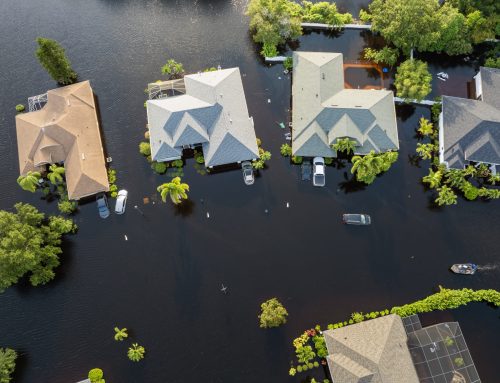
Standard landlord and dwelling policies generally exclude flooding caused by rising surface water.
As a result, property owners may need a separate flood insurance policy to protect the building. This coverage deserves particular attention in South Florida, where heavy rainfall, drainage conditions, tropical weather, and nearby waterways can increase flood exposure.
Property owners should review:
- The building coverage limit
- The flood deductible
- Coverage for contents owned by the landlord
- Whether the National Flood Insurance Program or a private insurer issues the policy
- Applicable waiting periods
- Current flood-zone information
- Any lender flood insurance requirements
Importantly, landlords should not base their decision solely on whether a lender considers the property to be in a high-risk flood zone. Flooding can occur outside designated high-risk areas. Instead, owners should evaluate coverage according to the property’s actual exposure.
Additionally, a landlord’s flood or dwelling policy generally does not insure a tenant’s belongings. Therefore, tenants may need their own renters insurance and contents coverage.
Review Hurricane and Windstorm Deductibles
Florida rental property insurance can include separate deductibles for hurricanes, named storms, wind, water damage, or other losses.
For example, an insurer may calculate a hurricane deductible as a percentage of the dwelling limit. As a result, the landlord could face a substantial out-of-pocket expense after a storm.
Moreover, a percentage deductible based on the full insured value of a rental home can cost considerably more than a standard fixed deductible.
Before selecting a policy, ask:
- What deductible applies to hurricanes?
- Does the policy include windstorm coverage?
- Does the policy have separate water-damage deductibles?
- Does the roof receive replacement-cost or actual-cash-value coverage?
- How much would each percentage deductible equal in dollars?
- Has the insurer documented storm shutters or other mitigation features?
Ultimately, a lower premium does not necessarily provide the best financial protection. Therefore, landlords should consider whether they could absorb the deductible and any repair expenses the policy does not cover.
Confirm Roof and Property Information
Florida insurers often examine a rental property’s roof, electrical system, plumbing, heating and cooling equipment, and overall condition.
Consequently, owners should provide accurate information about:
- Roof age and material
- Roof replacement permits
- Wind-mitigation inspections
- Four-point inspections
- Electrical panel type
- Plumbing supply lines
- Water heater age
- Prior property claims
- Hurricane shutters or impact protection
Incorrect information can affect pricing and eligibility. Therefore, after completing major improvements, owners should keep contracts, paid invoices, permits, inspection reports, and photographs.
These records can also help document the property’s condition and improvements when an insurance company evaluates coverage.
Consider Coverage for Landlord-Owned Property
Tenants typically insure personal belongings such as clothing, furniture, electronics, and household items through their own renters insurance.
However, landlords may still own property inside the rental, including:
- Refrigerators and other appliances
- Window treatments
- Furnished-room contents
- Lawn equipment
- Maintenance supplies
- Security systems
- Laundry equipment
Therefore, landlords should review their policies to determine which of these items receive coverage and whether the policy applies special category limits.
In particular, coverage for landlord-owned contents may prove important for furnished rentals or properties where appliances and equipment represent a significant replacement expense.
Require Tenants to Carry Renters Insurance
A landlord policy does not normally protect a tenant’s personal belongings.
For this reason, adding a renters insurance requirement to the lease can help tenants protect their possessions and obtain personal liability coverage. Additionally, it can reduce confusion and disputes after a fire, theft, water event, or other loss.
The lease should clearly explain:
- The required liability limit
- Proof-of-coverage requirements
- Whether the tenant must maintain coverage throughout the lease
- Any cancellation-notification requirements involving the landlord or property manager
- Requirements for pet or water-related endorsements
However, landlords should not present renters insurance as a substitute for their own landlord policy. After all, each policy protects different interests.
Address Vacancy and Renovation Risks
Insurance companies may handle a vacant, unoccupied, or under-construction property differently from an occupied rental.
For instance, many policies restrict or exclude certain losses after a property remains vacant for a specified period. These restrictions can affect coverage for vandalism, theft, water damage, glass breakage, and other risks.
Therefore, tell your insurance agent when:
- A tenant moves out
- The property will remain empty for an extended period
- Major renovations begin
- You disconnect utilities
- The building awaits a sale
- Damage prevents occupants from living in the property
Depending on the circumstances, the owner may need a vacant-property or builder’s-risk policy.
Accordingly, discussing these changes with an insurance professional before a long vacancy or major renovation can help owners understand how the change affects existing coverage.
Discuss Short-Term and Seasonal Rentals
A policy designed for a traditional annual tenant may not provide appropriate coverage for frequent short-term rentals.
Short-term occupants can create different risks involving guest turnover, property access, cleaning services, furnishings, amenities, and business activity. In addition, coverage from a booking platform may have limitations. Therefore, owners should not automatically treat platform protection as a replacement for an insurance policy.
Property owners should disclose the actual rental arrangement and ask whether the policy allows:
- Short-term rentals
- Seasonal occupancy
- Room rentals
- Multiple unrelated tenants
- Corporate rentals
- Vacation-rental activity
Furthermore, owners should review local licensing, zoning, tax, association, and lease requirements separately from their insurance coverage.
Match the Policy to the Ownership Structure
Individuals, couples, limited liability companies, trusts, partnerships, and other entities can own rental properties.
Therefore, the policy should identify the correct legal owner and accurately reflect that party’s insurable interest in the property. Depending on the arrangement, the policy may also need to identify lenders, property managers, or other parties in the appropriate capacity.
Importantly, placing a property in an LLC does not eliminate the need for liability or property insurance. An LLC can still face claims, repair expenses, legal costs, and lost rental income.
As a result, owners should coordinate their insurance coverage with their legal, tax, lending, and property-management arrangements.
Landlord Insurance for Homestead Rental Properties
Homestead and nearby communities such as Leisure City and Redland include single-family rentals, townhomes, duplexes, small multifamily properties, seasonal residences, and investor-owned homes.
Each property creates a different combination of building, liability, weather, tenant, and income risks. Consequently, a policy that works for one Homestead rental may not provide the right protection for another.
When Should You Review Your Landlord Policy?
Landlords should review rental property insurance whenever they purchase a property, sign a new lease, change the rental arrangement, complete renovations, replace a roof, form a new ownership entity, or experience a significant change in rental income.
Additionally, periodic reviews can help property owners identify changes in deductibles, coverage limits, rental income, property improvements, and other factors that could affect their insurance needs.
Choice One Insurance can help Homestead rental property owners review their current policies, identify potential gaps, and compare landlord insurance options.
Therefore, contact Choice One Insurance to request a landlord insurance review for your Homestead-area rental property.
Frequently Asked Questions About Landlord Insurance in Homestead
Is landlord insurance required in Florida?
Florida law does not impose one universal landlord insurance requirement for every rental property. However, a mortgage lender, homeowners association, property manager, or another agreement may require coverage.
Even without such a requirement, owners should consider the financial risks of operating a rental property without appropriate property and liability protection.
Can I use homeowners insurance for a rental property?
A homeowners policy generally serves an owner-occupied residence. However, when tenants occupy the home, the property typically requires landlord or dwelling coverage.
Therefore, always tell the insurance company how occupants use the property so the insurer can determine the appropriate policy type.
What does landlord insurance usually cover?
Depending on the policy, landlord insurance may include dwelling coverage, other structures, landlord-owned contents, premises liability, and fair rental value after a covered loss.
However, coverage varies by insurance company and policy form. Therefore, owners should review the actual policy terms, limits, deductibles, and exclusions.
Does landlord insurance cover unpaid rent?
Fair rental value coverage may replace rent when a covered property loss makes the home temporarily uninhabitable.
However, it generally does not cover rent simply because a tenant stops making payments.
Does landlord insurance cover a tenant’s belongings?
Generally, no. Instead, tenants usually need renters insurance to protect their personal belongings and obtain personal liability coverage.
Therefore, landlords should make this distinction clear when establishing insurance requirements in a lease.
Does landlord insurance cover flood damage?
Standard landlord policies generally exclude flooding caused by rising surface water.
Consequently, property owners may need a separate flood insurance policy to protect against this type of loss.
Do I need landlord insurance if the rental is owned by an LLC?
Yes. Forming an LLC does not provide insurance for the building, replace rental income after a covered loss, or pay liability claims.
Therefore, owners should make sure the insurance policy correctly identifies the property owner and any other appropriate insured interests.
Should I require tenants to have renters insurance?
Many landlords require renters insurance because it can protect a tenant’s belongings and provide tenant liability coverage.
Additionally, landlords who establish this requirement should clearly state it in the lease and explain any minimum coverage or proof-of-insurance requirements.
What happens if my rental property becomes vacant?
A prolonged vacancy can trigger coverage restrictions under some policies. However, the exact vacancy period and restrictions depend on the policy.
Therefore, notify the insurer when a rental property becomes vacant for an extended period. The insurance company or agent can then explain whether the existing policy remains appropriate or whether the property requires vacant-property coverage.
Visit Our Other Interesting Pages